Fix your heart or die!
and 1 other
boosted

Quando o segundo sol chegar
Para realinhar as órbitas dos planetas
#Tag
Quando o segundo sol chegar
Para realinhar as órbitas dos planetas
Quando o segundo sol chegar
Para realinhar as órbitas dos planetas
#ScienceFiction is informed by #Science
And Science in turn stares at Science Fiction, nods, and smiles broadly
"On ‘ #StarWarsDay’, researchers more than double the number of potential known ‘circumbinary’ planets like the fictional Tatooine, home to Luke Skywalker"
A circumbinary planet is a planet that orbits two suns
More than half of all stars exist in binary star systems or star systems with even more than two stars
https://www.theguardian.com/science/2026/may/04/scientists-discover-27-potential-new-planets
ainda bem que hoje é #maythe4th e vcs me lembraram que eu tenho que pagar o condomínio do apt
obrigada, nerdinhes 
#ScienceFiction is informed by #Science
And Science in turn stares at Science Fiction, nods, and smiles broadly
"On ‘ #StarWarsDay’, researchers more than double the number of potential known ‘circumbinary’ planets like the fictional Tatooine, home to Luke Skywalker"
A circumbinary planet is a planet that orbits two suns
More than half of all stars exist in binary star systems or star systems with even more than two stars
https://www.theguardian.com/science/2026/may/04/scientists-discover-27-potential-new-planets
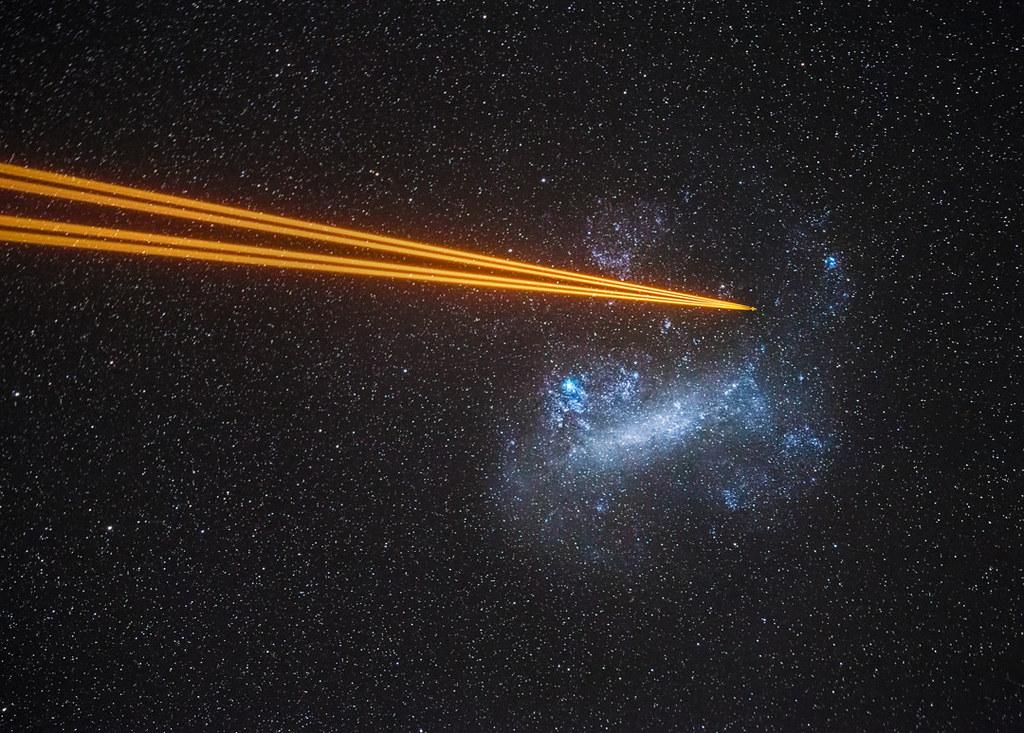
Happy #MayThe4th ! Here's a photo I took at @esoastronomy 's Paranal Observatory in #Chile, with one of our 8-m telescopes aiming its four lasers at the Large Magellanic Cloud, a small galaxy orbiting the Milky Way.
The lasers excite sodium atoms high up in the atmosphere, creating artificial "stars" whose twinkle we can measure in real time to correct atmospheric turbulence and get super sharp images.
This is how it works: https://www.youtube.com/watch?v=g_QC2cLroDc
ainda bem que hoje é #maythe4th e vcs me lembraram que eu tenho que pagar o condomínio do apt
obrigada, nerdinhes
Happy #MayThe4th ! Here's a photo I took at @esoastronomy 's Paranal Observatory in #Chile, with one of our 8-m telescopes aiming its four lasers at the Large Magellanic Cloud, a small galaxy orbiting the Milky Way.
The lasers excite sodium atoms high up in the atmosphere, creating artificial "stars" whose twinkle we can measure in real time to correct atmospheric turbulence and get super sharp images.
This is how it works: https://www.youtube.com/watch?v=g_QC2cLroDc
Os dados dos usuários serão deletados em algumas semanas. Vamos subir uma instância definitiva após finalizar os testes.